
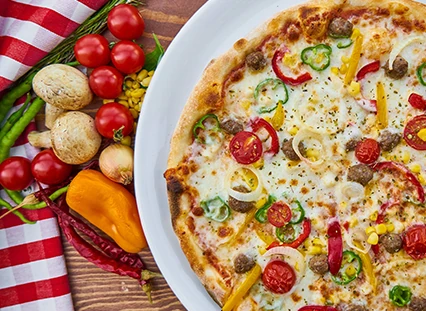
The Rise of Sourdough and Slow-Fermented Pizza

<p>Something is changing at the best pizzerias, and you can taste it in the crust. A wave of kitchens is slowing their dough right down, fermenting it for days rather than hours, and the result is a slice with more flavour, more character and a lighter bite.</p><h2>What slow fermentation actually does</h2><p>Given time, the dough develops complex flavour and a more digestible, open structure. A long, cool prove lets natural fermentation work gently, building taste that a fast rise simply cannot match.</p><h3>Sourdough versus commercial yeast</h3><p>Sourdough leans on a living starter rather than packet yeast, adding a subtle tang and an airy crumb. It asks more of the baker, but rewards the diner with a crust worth eating on its own.</p><h2>Why pizzerias are embracing it</h2><p>Diners are more curious about how their food is made, and a 48-hour dough is a story worth telling. It signals craft and patience, and it consistently produces a better base. For many kitchens, it has become a point of pride and a genuine difference-maker.</p><h2>How to taste the difference</h2><p>You do not need to be an expert to spot a great slow-fermented crust. Look for these signs:</p><ul><li>An airy, blistered rim with irregular holes rather than a uniform, dense edge.</li><li>A base that is crisp underneath yet tender and chewy inside.</li><li>A faint, pleasant tang that adds depth without overpowering the toppings.</li><li>A crust that stays satisfying right down to the last bite.</li></ul><blockquote>The crust is no longer the part you leave on the plate.</blockquote><h2>Does it survive delivery?</h2><p>A well-made slow-fermented crust actually travels well, holding its structure better than a thin, fast-proved base. Vented boxes help it keep its crispness, so the slice that arrives is close to the one that left the oven.</p><h3>Worth the wait</h3><p>Slow dough is a reminder that some things cannot be rushed. The next time a pizzeria mentions a multi-day prove or a sourdough starter, take it as a promise of a better slice.</p><h2>The craft behind the crust</h2><p>What makes slow fermentation so compelling is that it cannot be faked or hurried. A kitchen committing to a multi-day prove is making a real investment in planning, fridge space and consistency, and that commitment shows up in every slice. It is one of the clearest signals that a pizzeria cares about its base, not just its toppings.</p><p>There is a health dimension worth mentioning, too. Many people find that a long-fermented dough sits more comfortably than a fast-proved one, as the extended rise breaks down some of the components that can make bread feel heavy. It is one more reason the slow approach is winning over both chefs and diners.</p><h3>What to ask for</h3><p>If you want to seek out the good stuff, the menu often tells you. Phrases like 48-hour dough, naturally leavened or sourdough crust are all clues that a kitchen is taking the long road. When in doubt, simply ask how long they prove their dough; the answer speaks volumes.</p><p><strong>Curious to try it?</strong> Find pizzerias near you crafting slow-fermented pies and order one tonight.</p>
0 Comments
No comments yet. Be the first to share your thoughts.